> For the complete documentation index, see [llms.txt](https://docs.getupdraft.com/llms.txt). Markdown versions of documentation pages are available by appending `.md` to page URLs; this page is available as [Markdown](https://docs.getupdraft.com/your-projects/project-settings/integration-1/microsoft-teams.md).
# Microsoft Teams integration
Updraft integrates with Microsoft Teams seamlessly. Integrate Microsoft Teams and get notified about new available app versions or new received feedbacks.
### Microsoft Teams for app distribution
With just a few steps you can integrate Microsoft Teams into your app distribution process with Updraft and be informed about the latest app versions at any time and install them directly.
{% hint style="warning" %}
Microsoft is retiring the Office 365 Connectors feature from Microsoft Teams. The original retirement was announced for August 2024 and has been extended to **December 2025**. If you still have a legacy Connector *Webhook URL* configured in Updraft, replace it with a Power Automate **Workflow URL** before the cutoff — otherwise notifications will stop. This documentation has been updated for Workflows.
{% endhint %}
**Prerequisites:**
To integrate Updraft with Microsoft Teams, you need at least one channel in Teams and need to be able to create a Workflow for this Channel. Furthermore, your Updraft Account needs to be a Project-Admin.
#### 1. Create a Workflow for your Channel
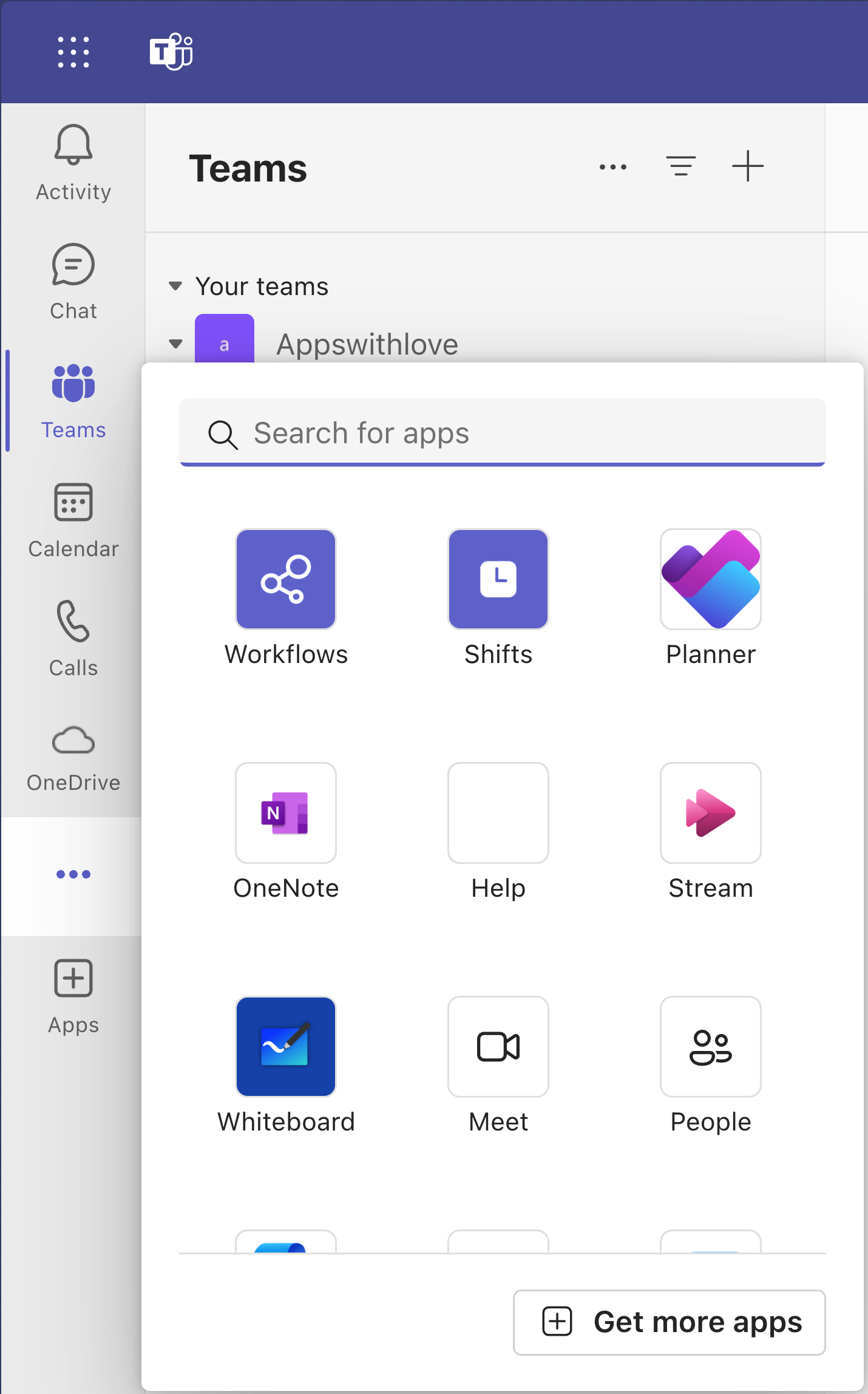
1. Press the three dots on the left Sidebar of Teams.
2. If you do not see the App *Workflows*, search it.
Press on Workflows to continue
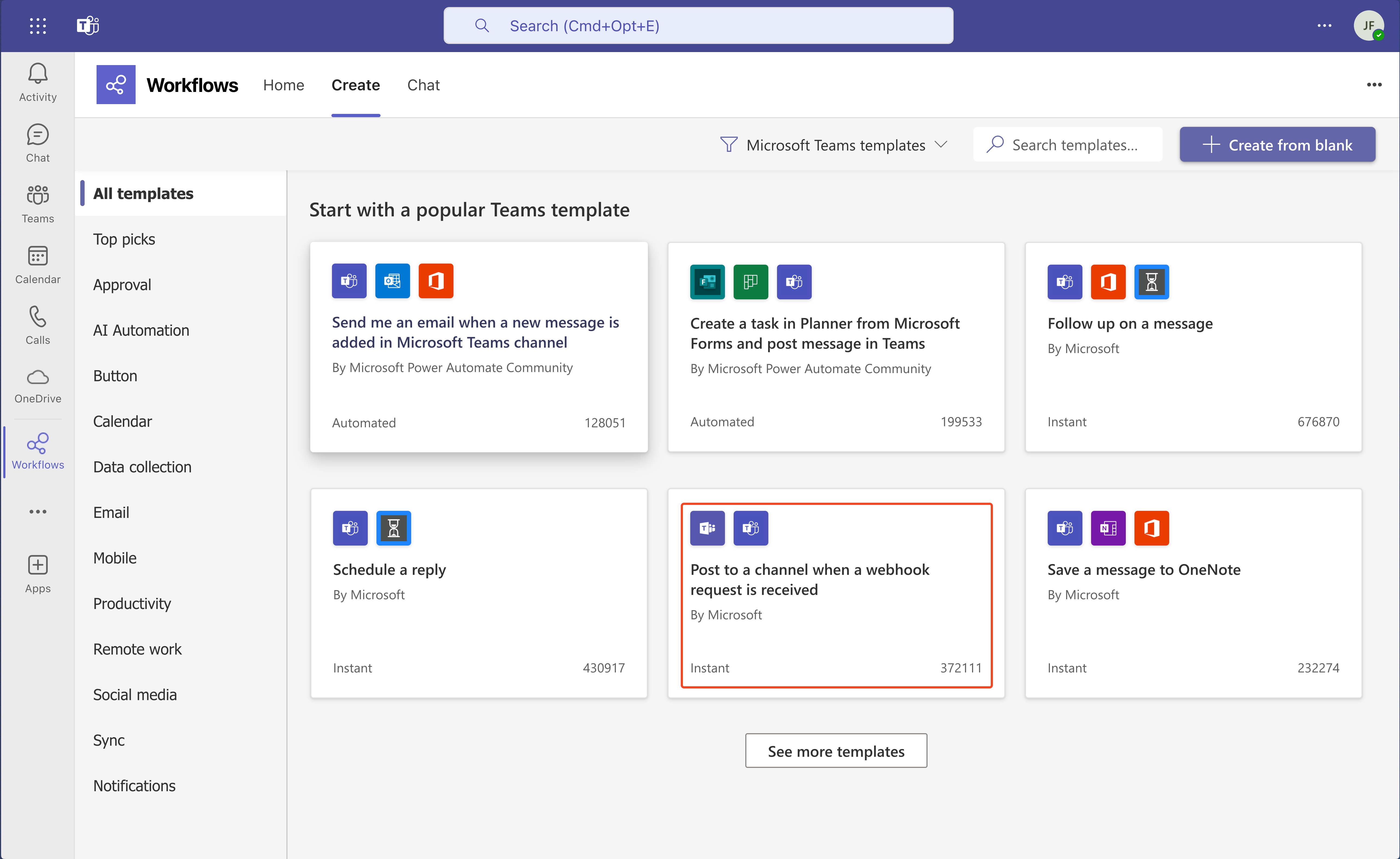
3. Then you can press on *New flow* and either use the *Post to a channel when a webhook request is received* or create a flow from blank.
Select the template or create a flow from blank.
4. Lets say you decide to use the template from Microsoft
5. Give this flow a name and if you are connected to teams, press on next.
6. Select your Teams Team and Teams Channel in which you want to post a message. Press on *Create a flow.*
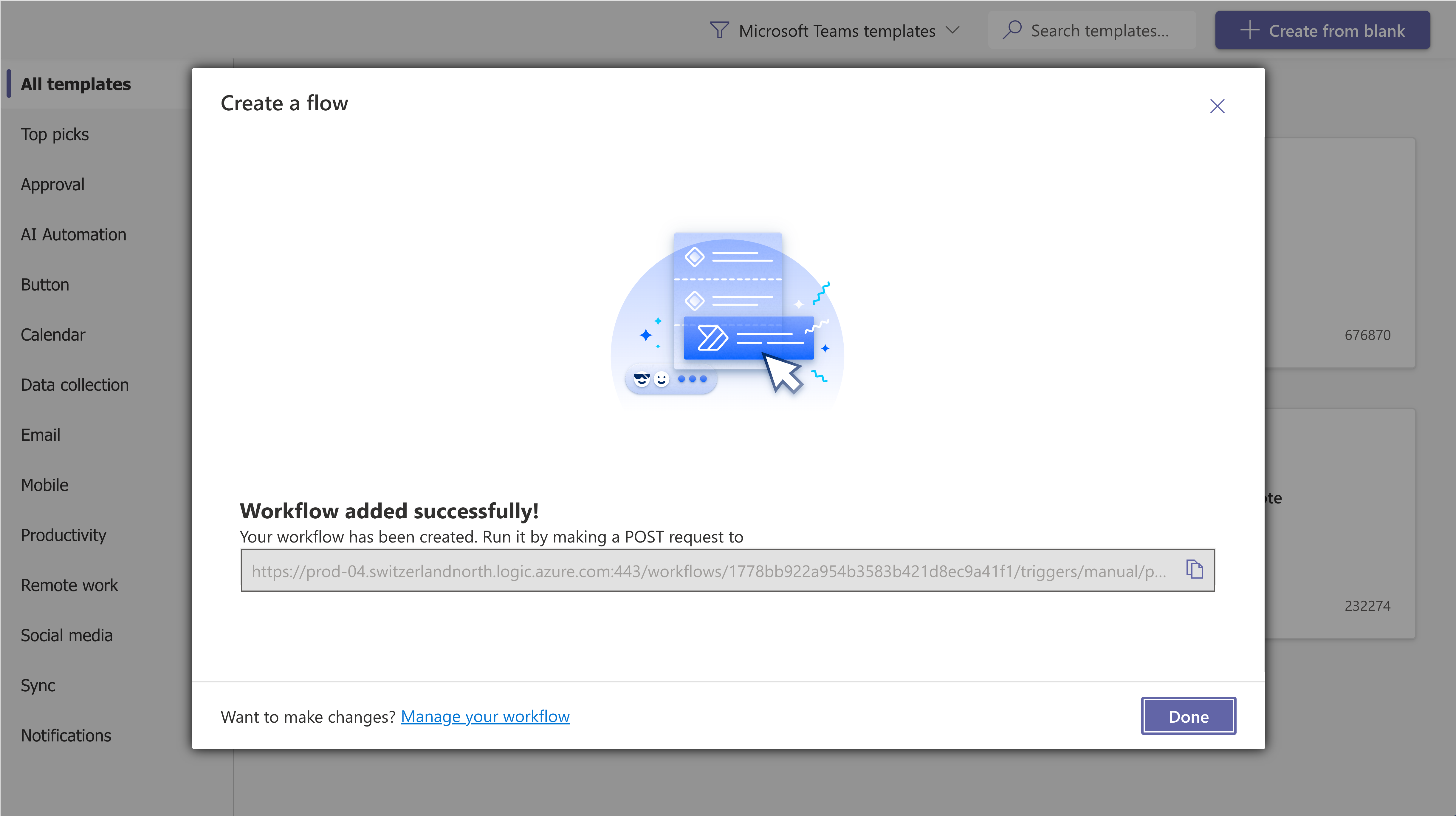
7. Great! Now copy the URL of the Workflow and switch to Updraft.
Copy this URL, you will need it later
{% hint style="info" %}
Updraft accepts Workflow URLs on the `*.powerplatform.com` and `*.logic.azure.com` domains. Legacy `*.webhook.office.com` Connector URLs are no longer accepted.
{% endhint %}
#### 2. Add a Integration to Updraft
1. Select the Organization and Project. Then navigate to the *Project Settings*
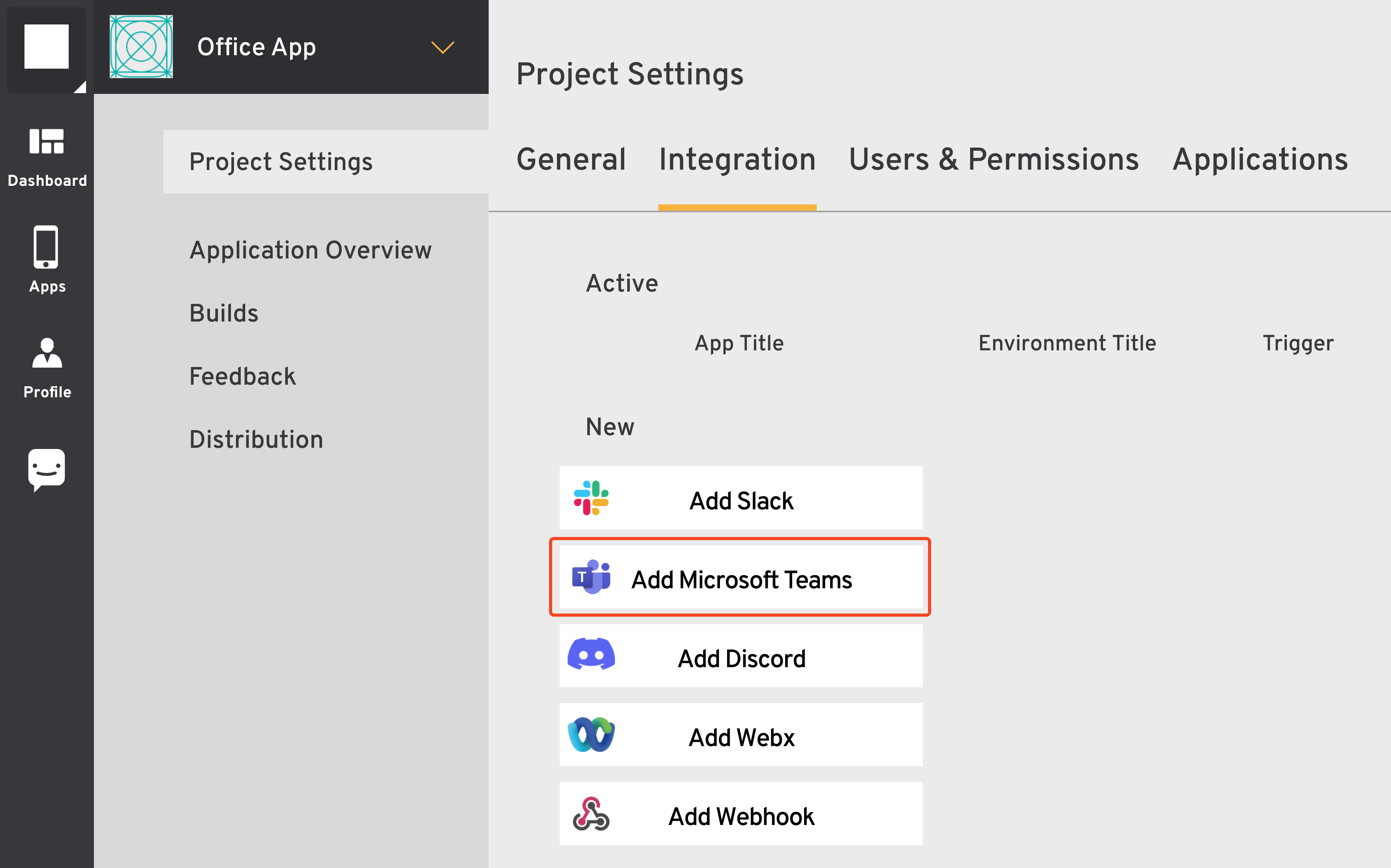
2. Go to the *Integration* tab and add a Microsoft Teams Integration.
Add a Microsoft Teams Integration.
3. Add a name and the URL from the Teams Workflow.
4. If you want to configure the Workflow only for a specific App, select it.
5. Press on *Save* and navigate to the *Builds* of your Project.
#### 3. Test the Integration of the Workflow.
1. On the *Builds* page, upload a new Build.
2. After a new build was uploaded, switch to Teams again and check your configured Channel.
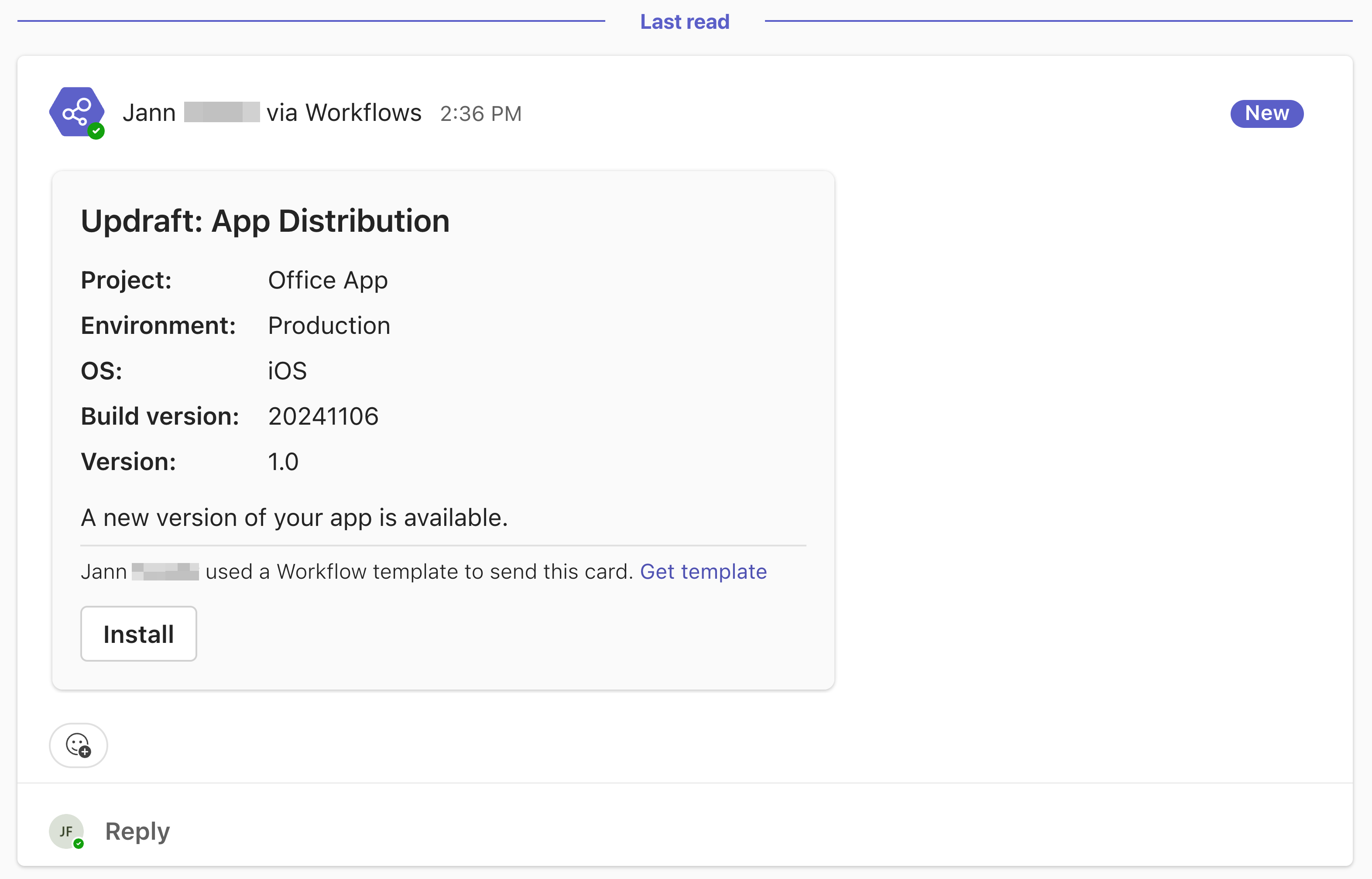
A automated Post was send via Workflows, perfect!
Great, now you will get a message via Workflows every time you upload a build from Updraft.
**Message format**
Notifications are delivered as an Adaptive Card (full-width in the Teams chat) with project, app, environment, feedback, and device facts, plus the Description rendered as its own wrapped block so long text stays readable. A **Feedback** button links back to Updraft.
{% hint style="info" %}
If you do not want to have the little message that this Workflow uses a template, you will have to create a flow from blank in step 1.4.
{% endhint %}